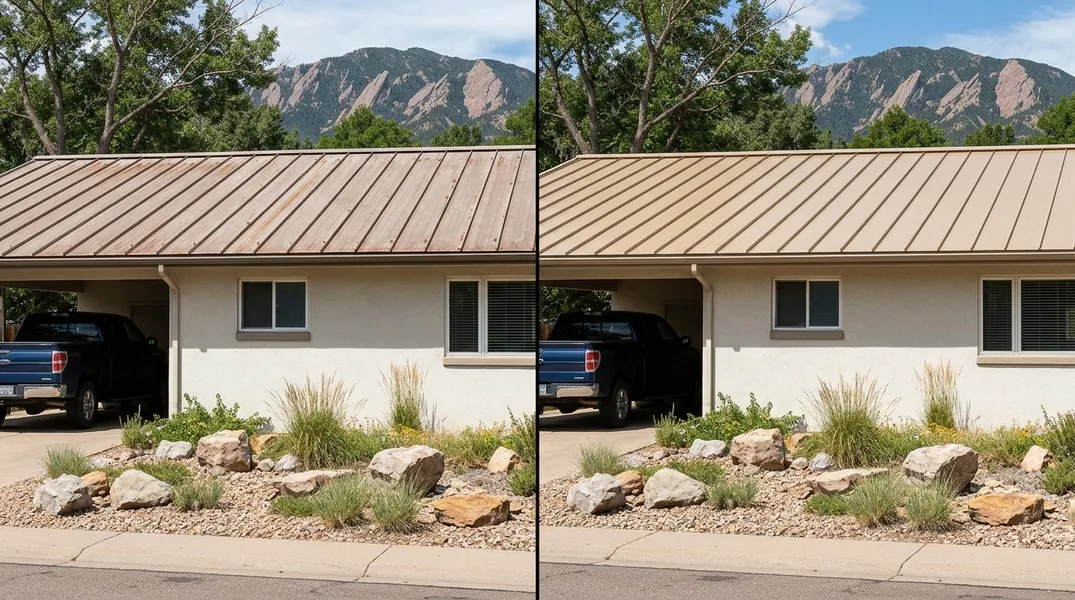
Why Boulder County Homeowners Are Rethinking Their Roofs
If you live in Boulder County, you already know the rhythm of wildfire season. The smell of smoke on a summer afternoon, the alerts on your phone, the bags packed by the door just in case. For years, homeowners focused on clearing brush and creating defensible space. Those steps matter, but there is another part of the home that deserves just as much attention: the roof. Your roof is the largest horizontal surface on your house, and it is exactly where wind-blown embers land first.
Traditional asphalt shingles can be vulnerable to ember showers. Even if the shingle itself resists ignition, the gaps, vents, and accumulated debris around them can catch fire. That is why more homeowners in Boulder are asking about fire resistant roofing. A Class A metal roof changes the equation. Metal will not ignite, and when installed with the right underlayment and ember-resistant detailing, it gives your home a real fighting chance during a wildfire event.
What Makes a Metal Roof Fire Resistant?
Not all metal roofs are created equal, and the details matter. A Class A metal roof is rated by the same standards used for fire-resistant construction, meaning it has passed rigorous testing for flame spread and ember penetration. Steel and aluminum do not burn, so the surface itself will not fuel a fire. The real work happens underneath: a fire-rated underlayment and careful sealing around penetrations, valleys, and eaves keep embers from finding a way in.
This is where professional installation makes the difference. An ember resistant roof is only as good as its weakest point, and that is usually the flashing, the ridge vents, or the transition where the roof meets the wall. A crew that understands wildfire construction will use non-combustible flashing materials and close off the small openings that embers exploit. If you are comparing options, ask specifically about the fire rating and the underlayment system, not just the metal panels themselves.
Standing Seam Metal Roofing: The Gold Standard for Wildfire Zones
Among metal roofing options, Standing Seam Metal Roofing stands out for wildfire country. The panels run vertically and interlock with raised seams, which means there are far fewer fasteners and penetrations than with exposed-fastener panels. Fewer penetrations mean fewer places for embers to lodge. The smooth surface also sheds pine needles, leaves, and debris that would otherwise collect in the valleys of a shingle roof and create a ready fuel source.
Standing seam is also a smart choice for hail, which is the other big weather threat along the Front Range. The concealed fasteners and heavier gauge steel hold up well to impact. Homeowners in Louisville and Lafayette often choose standing seam for exactly this reason: it handles both fire risk and hail risk in one investment. It is not the cheapest option upfront, but it is one of the longest-lasting roofs you can put on a Colorado home.
Metal Roof Installation Near Me: What the Process Looks Like
If you are searching for metal roof installation near me in Boulder County, here is what a professional project should involve. It starts with an inspection of your existing roof structure, decking, and attic ventilation. A good installer will check for soft spots, proper flashing details, and whether your home has the structural capacity for a metal system. From there, you get a written proposal that spells out the panel type, gauge, underlayment, and fire rating.
During installation, the crew removes the old roofing (or prepares the deck for a retrofit), installs the fire-rated underlayment, and sets the panels with attention to every edge and penetration. A Metal Roof Installation typically takes several days depending on the size and complexity of the roof. If your existing shingles are in good condition, a Metal Roof Over Shingles (Retrofit) can save time and landfill waste, but your installer should confirm it is appropriate for your home. For a roof that has been damaged or is near the end of its life, a full Metal Roof Replacement is usually the better path.
Metal Roof Installation Cost in Boulder: What to Budget
Homeowners often ask what a metal roof costs compared to asphalt. The honest answer is that metal costs more upfront, sometimes two to three times as much depending on the panel and complexity. But when you factor in lifespan, hail resistance, and the insurance discounts some carriers offer for Class A fire-rated roofs, the long-term math often favors metal. A standing seam roof can last 40 to 70 years, while an asphalt roof in Colorado's climate may need replacing every 15 to 20 years.
Actual pricing depends on roof size, pitch, panel type, and whether you need a full tear-off or a retrofit. The best way to get a real number is to request a free estimate. A local installer will measure your roof, inspect the decking, and give you a clear written scope. Be cautious of any quote that does not specify the underlayment and fire rating, because those details are what make the roof genuinely wildfire-ready.
Is a Metal Roof Right for Your Colorado Wildfire Home?
No roof can guarantee a home survives a wildfire, but the right roof can meaningfully reduce risk. A Class A metal roof with proper ember-resistant detailing gives you one less thing to worry about when the wind shifts and the alerts go out. It also holds up to the hail, snow, and sun that define life along the Front Range. For homeowners in Superior and across Boulder County, that combination of durability and fire resistance is hard to beat.
If you are ready to explore your options, Boulder Metal Roofing can walk you through panel choices, fire ratings, and installation details. Call (970) 670-9229 to schedule a free estimate and get a clear plan for a roof that is built for Colorado wildfire country.
Looking for a professional metal roofing contractor in Boulder? Boulder Metal Roofing responds fast for all your metal roofing needs.
Get a Free QuoteOur services: Metal Roof Installation · Standing Seam Metal Roofing · Metal Roof Replacement